What to Do When Your Diesel Truck
Breaks Down on 401/Hwy1
Complete guide for handling diesel truck breakdowns on Hwy 1 or 401.
Safety tips, emergency contacts, and step-by-step instructions from professional mechanics.
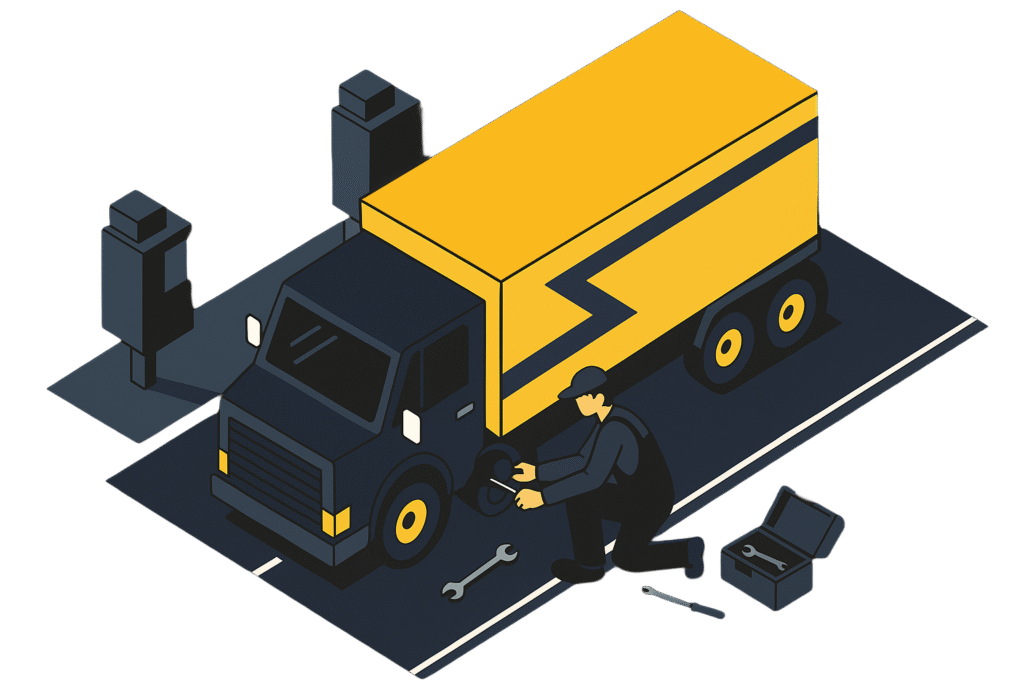
Breaking down on 401 or Hwy 1 in a diesel truck isn’t just inconvenient—it can be dangerous. With heavy traffic, limited shoulder space, and trucks speeding by at 100+ kph, knowing exactly what to do can save your life and get you back on the road faster.
NEED HELP NOW?
CALL US 24/7 FOR IMMEDIATE ASSISTANCE
Immediate Safety Steps When Your Diesel Breaks Down

Get Off the Road Safely
As soon as you notice trouble, turn on your hazard lights and begin moving to the right shoulder. Don’t wait—diesel engines can fail quickly once problems start.

Position Your Truck Properly
Pull as far onto the shoulder as possible. On 401 or Hwy 1, shoulders vary in width, especially near Vancouver and North York. Get your entire truck off the travel lanes if possible.

Exit on the Passenger Side
Never exit on the driver’s side facing traffic. Use the passenger door and move away from the highway to a safe distance.

Set Up Warning Devices
If you can safely do so, place reflective triangles at 50, 100, and 200 feet behind your truck. This gives other drivers time to move over.

Call for Professional Help
Don’t attempt repairs yourself on the highway. Call professional mobile diesel repair for safe, proper service.
Common Highway Breakdown Locations
Based on our experience serving clients, these areas see the most breakdowns:
High-Risk Areas in Metro Vancouver
- Trans‑Canada Highway 1 (Horseshoe Bay → Vancouver / Burrard Inlet corridor): Steep grades coming from the Sea to Sky side or from West Vancouver.
- Southbound Hwy 99 into Vancouver via Oak Street Bridge – frequent stop-and-go, high truck volumes, limited shoulder space.
- Highway 91/17 interchange near Alex Fraser Bridge – high truck volumes, merging traffic, minimal recovery area for disabled vehicles.
- North end of Knight Street Bridge approaching SE Marine Drive – heavy truck flow, limited shoulder, risk of stranded vehicle obstructing lanes.
- Grade climb eastbound Hwy 1 from Abbotsford towards the Fraser Canyon – heavy truck use, long sustained climb, increased risk of breakdown when cooling or braking systems fail.
High-Risk Areas in Greater Toronto Area
- Express lanes of Hwy 401 between Hwy 400 and Don Valley Parkway – heavy truck traffic, rapid lane changes, breakdowns can block high-capacity lanes.
- Hwy 400 southbound entering Toronto – approaching Jane/Steeles area, heavy trucks merging, limited shoulder room, likely location of truck breakdowns interfering with commuter flow.
- QEW westbound near Burlington–Hamilton – heavy freight volumes, commuter-peak traffic, breakdowns in shoulder risk spillover into lanes.
- Hwy 403 → Hwy 410 ramp at Brampton-Bovaird – heavy truck turn-off zone, breakdowns here cause major backups onto express lanes.
What Causes Diesel Breakdowns on Highways?
Understanding common causes helps prevent future breakdowns:
Overheating
Long grades and hot weather stress cooling systems. Watch your temperature gauge closely on hills.
Fuel System Issues
Bad fuel, water contamination, or clogged filters can cause sudden power loss. Regular fuel system maintenance is critical.
Tire Blowouts
Hot pavement and heavy loads increase blowout risk. Check tire pressure before long trips.
Brake Failures
Steep descents can overheat brakes. Use engine braking and monitor brake temperatures.
Electrical Problems
Alternator failures and battery issues are common. Watch for dimming lights or slow cranking.
Turbo Failures
Loss of power on grades often indicates turbo issues. Don’t ignore black smoke or oil leaks.
Prevention Tips for Highway Travel
Before Your Trip
- Check all fluid levels (oil, coolant, DEF)
- Inspect tires for proper pressure and wear
- Test brakes and brake adjustment
- Verify all lights work properly
- Check belts and hoses for wear
During Your Trip
- Monitor gauges constantly
- Use lower gears on steep grades
- Take breaks to let components cool
- Watch for warning signs (unusual noises, smells, etc)
- Keep our number handy: (888) 755-1414
What to Tell the Dispatcher
When you call for help, provide this information for fastest service:
- If you’re blocking traffic
- Your exact location (mile marker, nearest exit, direction of travel)
- Type of truck and trailer
- Description of the problem
- Any warning lights or codes
- Whether you’re loaded or empty
Cost Considerations
Emergency breakdown costs typically include:
- Service Call Fee: Covers technician travel and initial diagnosis
- Hourly Labor: Most repairs take 1-3 hours on-site
- Parts: We stock common parts for faster repairs
- After-Hours Rates: Nights and weekends may have additional charges
Many insurance policies and roadside assistance plans cover emergency diesel repair. We work with all major providers and can bill directly when possible.
Why Choose Professional Mobile Repair?
Attempting DIY repairs on Hwy 1 or 401 is dangerous and often illegal. Professional mobile diesel mechanics offer:
- Guaranteed work
- Proper safety equipment and procedures
- Complete diagnostic tools
- Extensive parts inventory
- Experience with roadside conditions
- Insurance and liability coverage
Remember: Safety First
Your safety is more important than your schedule.
When in doubt, call for professional help.
We’ve rescued thousands of drivers from Hwy 1 & Hwy 401 breakdowns and can get you moving safely.
Save our number now: (888) 266-2614
Related Resources
24/7 Emergency Roadside Assistance
Learn about our emergency response services
Hwy 1 & 401 Service
Complete coverage in GTA & Metro Vancouver
Professional Diesel Mechanics
Why expertise matters for diesel repair